Contacts

3047, Wishing Well Wynd, Apex NC 27502

vidyashakti2018@gmail.com

Contact # 
+1-919-412-4236/+1- 919-564-6894
Nitya Ganapathy
CHARITY

Stories on Gender Discrimination by Nitya Ganapathy

INTERESTING STORIES ON GENDER DISCRIMINATION FROM NITYA GANAPATHY
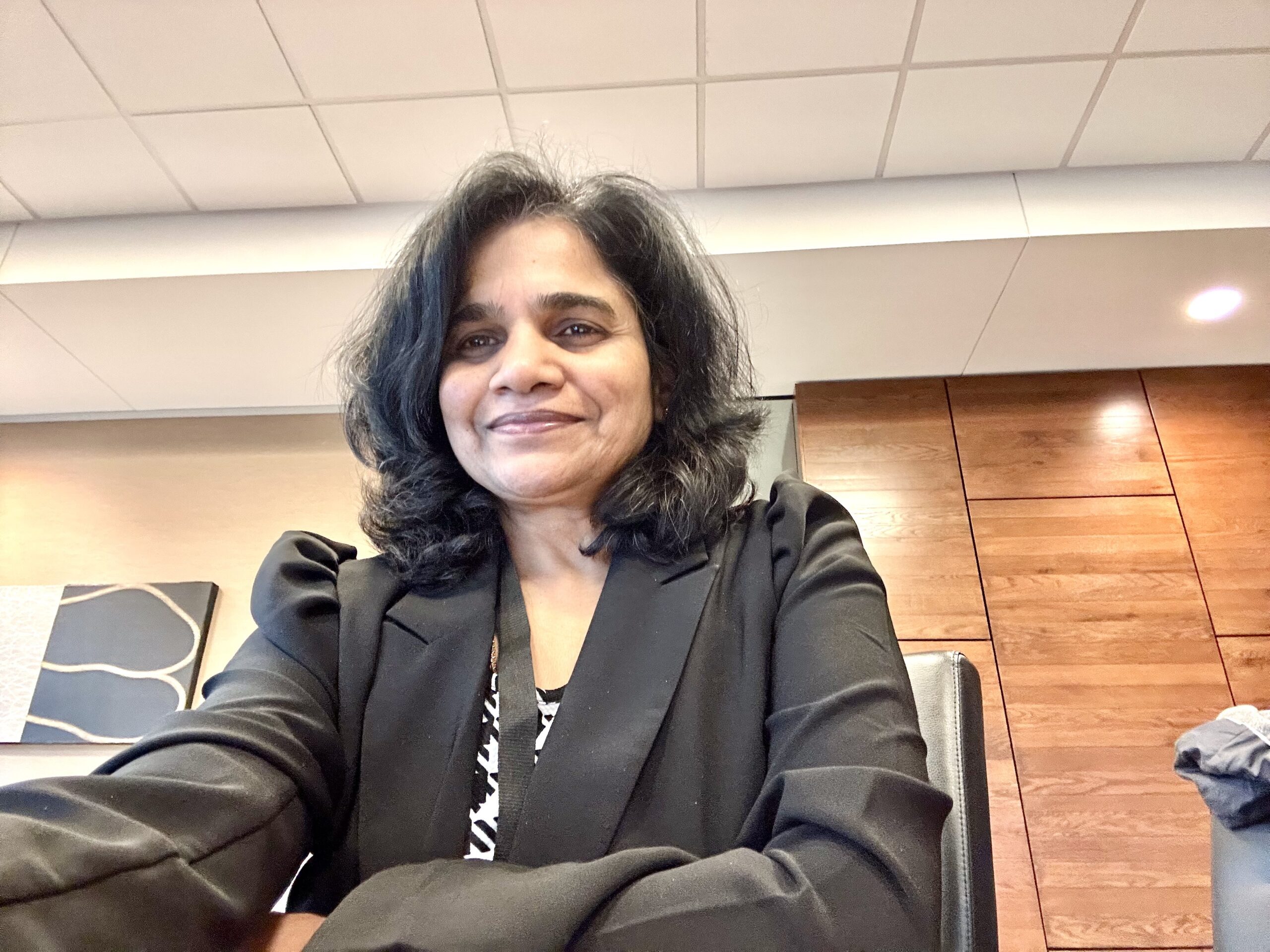
Nitya Ganapathy
Nitya Ganapathy

Story 1: The Girl Who Was Given
Buttermilk

When Nitya was a child, her mother often told her stories about growing up in a large ancestral home.
At lunchtime, all the children would sit together to eat.
But there was a difference. The boys were served thick, rich yoghurt.
The girls were given thin buttermilk. No one questioned it.
It was simply “the way things were.” Her mother was a brilliant student who dreamed of college. But at 16, her books were taken away, and she was married off.
Years later, Nitya noticed the same pattern in her own home. Her brothers’ needs came first. She learned early that if she wanted equal treatment, she had to ask for it. Sometimes, she had to fight for it.
But she also made a silent promise: Her life would not be limited by traditions that underestimated her. She worked hard, built a successful career, and eventually began supporting the education of underprivileged girls.
Because she knew something deeply: Every girl deserves more than buttermilk when she is capable of so much more.


Story 2: The Daughter Who Had No Role

In January 2024, Nitya returned to her childhood home. Her mother had passed away. As she stood there, grieving, she watched the rituals being performed. Her brothers led every ceremony. Relatives gathered around them. Priests guided them. But no one called her. Because she was a daughter. She had no role.
She felt invisible. 
Not because she was unloved—but because tradition had decided her place long ago. That day, she did not argue. She did something more powerful.
She decided to honour her parents in her own way. She began sponsoring education and food for underprivileged girls.
If she was not given a place in rituals, she would create her place in changing lives.

Story 3: The Woman Who Had to Prove
Herself Twice

When Nitya began her career in technology in the 1990s, she was one of the few women in the field. Later, when she moved to the United States, the challenges became harder. She worked longer. Performed better. Delivered more. 

Yet, when promotions came, she was passed over. Again. And again.

She was often the most qualified person in the room. But she had to prove herself more than anyone else. Not because she lacked ability. But because she was a woman. And a minority.
Many would have given up. She didn’t. She persisted. She succeeded.


And today, she works to ensure young girls never have to fight the same battles alone. Because she believes: Equality will not come by waiting. It will come by empowering the next generation.

The Ceiling Fan

The first ceiling fan in the house was a wonder.
It was the early 1930s, in a large ancestral home in the backwaters of Kerala. For the family, it was a symbol of progress and modern life.
But for one grandmother, it was a source of fear. She worried constantly.
“What if it falls?”
Every afternoon, after lunch, all the children—boys and girls—would lie down on the cool floor beneath the fan for their nap.
Before leaving the room, the grandmother would carefully look around.
She would gently wake the boys sleeping directly under the fan. 

“Move away,” she would say. “It’s not safe here.”
She would make sure every boy was protected. Then she would leave.

The girls remained where they were.
No one asked them to move. No one worried if the fan might fall on them.

Years later, this story was told to a young girl named Nitya Ganapathy by her mother, who had been one of those little girls. It wasn’t the fan that stayed in her memory. It was the message.
Even as children, the boys were seen as more valuable. More deserving of protection. More important to the family’s future.
The girls grew up learning something without anyone saying it aloud:
Their safety mattered less.

That quiet afternoon, under a slowly turning ceiling fan, was not just a childhood memory. It was a reflection of a society that placed different values on its children.
But that little girl who heard the story grew up determined to change it. Because she believed something simple and powerful: Every child deserves equal care. Every dream deserves an equal chance.
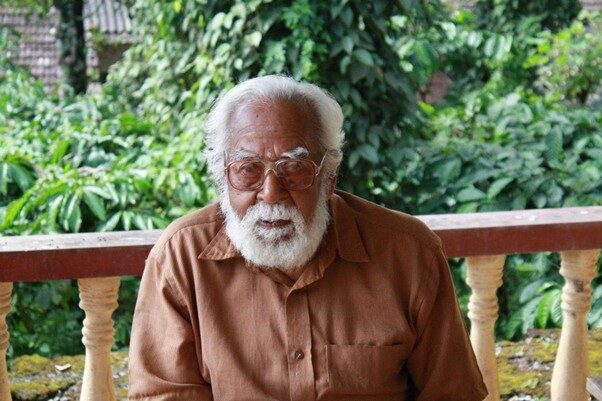
Sri. N Viswanathan Founder MAIHS Murukkady
CHARITY

The Man Who Refused to Let Distance Decide a Child’s Future

Sri. N Viswanathan Founder MAIHS Murukkady

Sri. N Viswanathan Founder MAIHS Murukkady

MAIHS Murukkady

MAIHS MURUKKADY

MAI HS Murukkady

MAI HS Murukkady


The Man Who Refused to Let Distance Decide a Child’s
Future

An inspiring true story of Sri. N. Viswanathan (The Founder of Mankompu Aundy Iyer High
School)

In the mist-covered hills of Murukady in Kerala, sometime in the 1940s, a young estate
owner stood watching a group of children playing barefoot in the mud. They laughed freely,
unaware of what they were missing.
But he knew.
His name was N. Viswanathan.
Born in 1913 into a wealthy and orthodox Brahmin family in Mankompu, Viswanathan had
everything, education, status, and privilege. After completing his studies, he took charge of
his family’s vast 1500-acre tea estate in the remote hills of Kottayam district.
What he saw there changed his life forever.
There were no roads. No electricity. No hospitals. Malaria was everywhere. The plantation
workers suffered in silence.
Viswanathan could have ignored it. After all, he was the owner. Instead, he acted.
He built a small medical dispensary so workers could receive treatment. Every day, he
watched sick workers arrive with their children in tow. The children would sit outside,
waiting.
One question began to haunt him:
“Are these children getting an education?”
The answer was heartbreaking.
The nearest school was 25 miles away.
Twenty-five miles. There were no buses. No transport. No roads.
For these children, school was not just far, it was impossible.
Most estate owners would have accepted this as reality.

Viswanathan refused.
In 1948, in the middle of that remote plantation, he did something extraordinary.
He built a school. That school would become the Mankompu Aundy Iyer High School.
It was more than a building. It was hope.
For the first time, children of plantation workers walked into classrooms instead of fields.
They held books instead of tools. They dreamed of futures their parents never had.
But Viswanathan didn’t stop there.
He helped establish a health centre. He brought a post office to the village, so important that
it was later named Viswanathapuram in his honour. He donated land for a temple. He served
as the first President of the Kumily Panchayat for three terms.
He didn’t just build institutions. He built a community.
Decades later, his school still stands strong. Thousands of students have passed through its
gates. Many became professionals, teachers, and leaders.
His decision, made in a remote plantation nearly 80 years ago, continues to change lives.
Today, organisations like Vidyashakti for girls carry his legacy forward, supporting the same school,
building smart labs, and empowering a new generation of girls.
Because one man believed something powerful:
No child’s future should depend on where they are born.
Sri. N. Viswanathan was not just a founder.
He was a man who turned compassion into action.
And in doing so, he turned distance into opportunity.


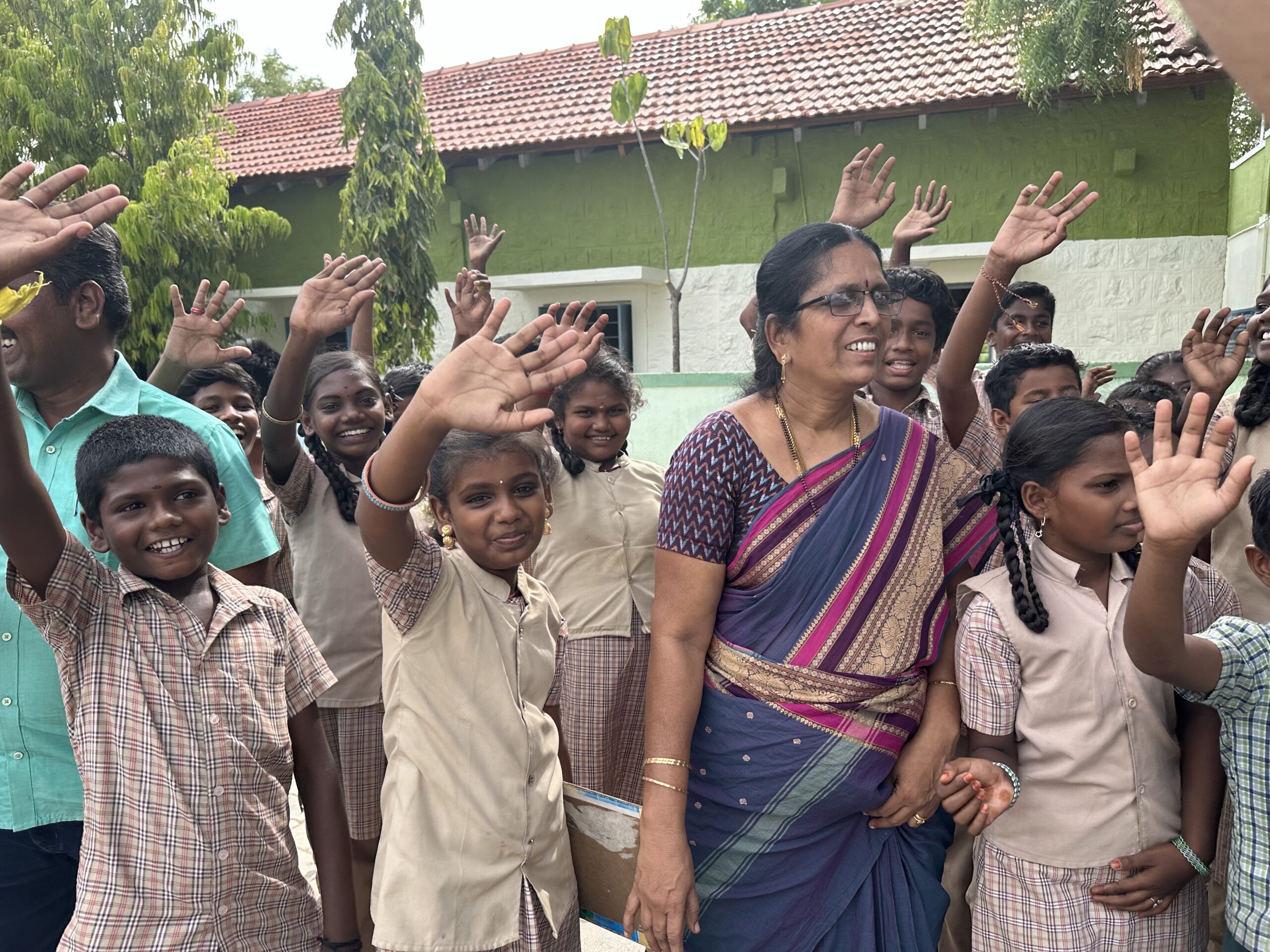
Children of Koyilpatti school sponsored by Vidyashakti.
CHARITY

Girls’ Education and Women’s Empowerment in India: Challenges, Progress, and the Way Forward

Introduction: Why Girls’ Education is Critical for India’s Future ?

Girls’ education in India is not just a social issue—it is a national development priority. Educating girls improves economic productivity, enhances family health, reduces poverty, and creates empowered communities. However, despite progress, millions of girls in India still face barriers to accessing quality education.
(This is a study by the Vidyashakti team, with insights from economist Nitin Krishnan, that highlights the persistent educational disparities affecting girls and the urgent need for sustained action).

Female Literacy Rate and Educational Status in India after COVID -19

India has made steady progress in improving female literacy. However, the female literacy rate remains significantly lower than that of male literacy.
Key challenges include:

 High dropout rates among adolescent girls
 Limited access to quality secondary education
 Economic constraints among low-income families
 Gender discrimination and social norms

Many girls, especially from economically weaker sections, are forced to discontinue education due to financial hardship or household responsibilities.

The COVID-19 pandemic created one of the biggest disruptions in education globally, and girls were among the worst affected. Major impacts included:

 Millions of girls dropping out of school permanently
 Lack of access to digital learning due to the gender digital divide
 Increased child marriage rates
 Reduced family investment in girls’ education

This setback reversed years of progress and highlighted the vulnerability of girls’ education during crises.

Social Barriers: Child Marriage, Poverty, and Gender
Norms

Social and cultural factors remain major obstacles to female education in India.
These include:
 Child Marriage: Early marriage often ends a girl’s education permanently
 Poverty: Families prioritise boys’ education over girls
 Menstrual Hygiene Challenges: Lack of proper sanitation facilities leads to
absenteeism and dropout
 Domestic Responsibilities: Girls are often expected to manage household duties
When girls are denied education, it creates a cycle of poverty that continues for generations.

Importance of Education for Women’s Empowerment

Education is the foundation of women’s empowerment.
Educated women are more likely to:

 Become financially independent
 Make informed life decisions
 Support their children’s education
 Avoid early marriage
 Escape domestic violence
Education strengthens not just individuals, but entire communities and economies.

Social Barriers: Child Marriage, Poverty, and Gender
Norms

Social and cultural factors remain major obstacles to female education in India.
These include:
 Child Marriage: Early marriage often ends a girl’s education permanently
 Poverty: Families prioritise boys’ education over girls
 Menstrual Hygiene Challenges: Lack of proper sanitation facilities leads to
absenteeism and dropout
 Domestic Responsibilities: Girls are often expected to manage household duties
When girls are denied education, it creates a cycle of poverty that continues for generations.

Importance of Education for Women’s Empowerment

Education is the foundation of women’s empowerment.
Educated women are more likely to:

 Become financially independent
 Make informed life decisions
 Support their children’s education
 Avoid early marriage
 Escape domestic violence
Education strengthens not just individuals, but entire communities and economies.

The Role of Quality Education

Research shows that improving the quality of education leads to:
 Higher enrollment
 Lower dropout rates
 Better learning outcomes
Access alone is not enough—girls must receive quality education that builds skills and confidence.

Breaking the Cycle: The Way Forward

To improve girls’ education in India, key actions include:


 Increasing awareness among families

 Improving school infrastructure and sanitation
 Preventing child marriage
 Supporting girls financially
 Promoting gender equality in education

Investing in girls’ education is one of the most powerful ways to build a stronger and more equitable nation.

Conclusion: Educate a Girl, Empower a Nation

Educating girls is not just about equality—it is about progress.
When girls are educated:


 Families become healthier
 Economies become stronger
 Societies become more equal


Organizations like Vidyashakti continue to play a vital role in supporting girls’ education and empowering young women to become confident leaders of tomorrow. Join us Today!!!


School Children at Koyilpatti